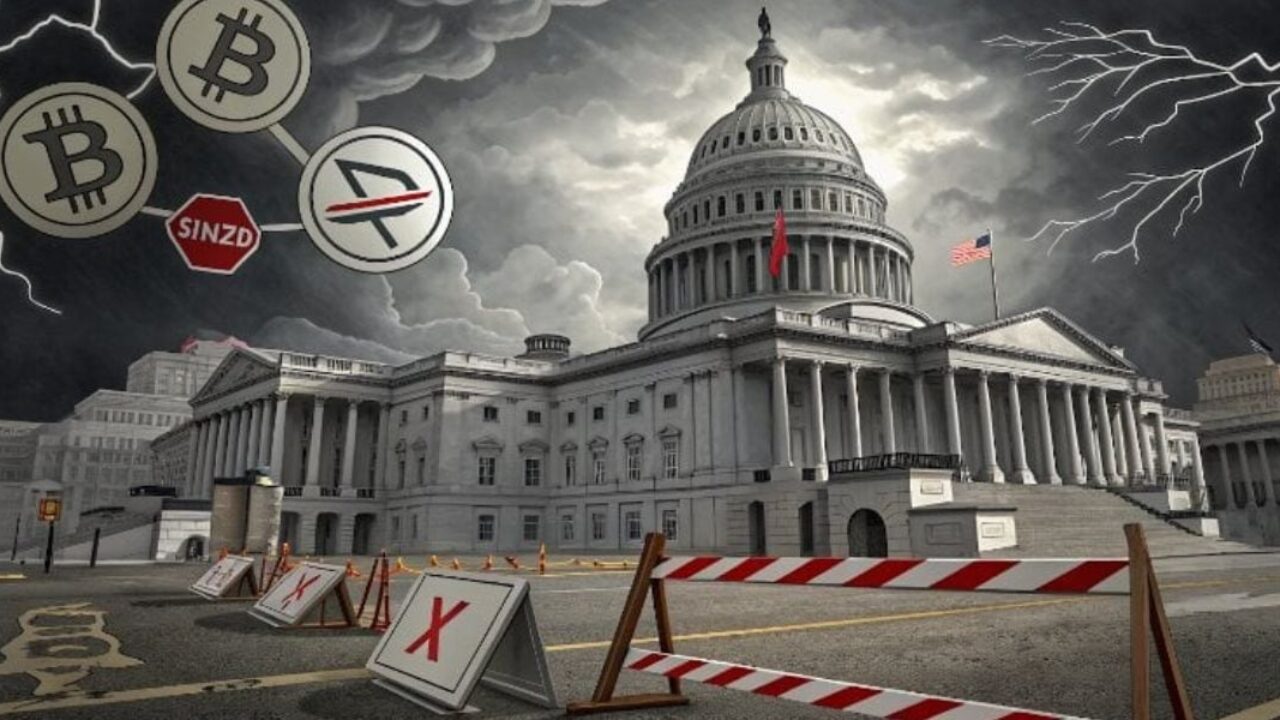
Understanding How Political Uncertainty Impacts Digital Assets
When the U.S. government faces a shutdown, financial markets usually tense up. Stock traders, investors, and even small business owners start asking the same question — what happens next?
But in recent years, another question has gained attention: How does a government shutdown affect the crypto market?
At first glance, crypto and government operations seem worlds apart. After all, Bitcoin and other digital assets are decentralized, meaning they don’t rely on central authorities. However, the reality is more nuanced. As governments play a major role in financial regulation, taxation, and investor sentiment, a shutdown can have ripple effects that reach deep into the crypto ecosystem.
In this guide, we’ll explore how a U.S. government shutdown could impact crypto, from short-term price volatility to long-term regulatory challenges — and what investors should do to stay prepared.
1. What Exactly Is a Government Shutdown?
The basics for beginners
Before diving into how crypto could be affected, let’s first understand what a government shutdown really means.
A government shutdown happens when Congress fails to pass a budget or funding bill for federal agencies. When that happens, many government operations — except essential ones like national security and emergency services — temporarily stop.
This means:
-
Federal employees might be furloughed (temporarily laid off).
-
Economic data releases (like inflation reports) could be delayed.
-
Regulatory agencies, including the Securities and Exchange Commission (SEC) and Commodity Futures Trading Commission (CFTC), may reduce or pause operations.
For the crypto industry, those last two points are especially important.
2. Why a Shutdown Matters for the Crypto Market
More connected than you might think
At first, you might assume that since crypto is decentralized, it shouldn’t care what happens in Washington, D.C. But that’s not entirely true.
Here’s why:
-
Crypto regulation depends on government agencies. The SEC, CFTC, and IRS are responsible for approving crypto ETFs, monitoring exchanges, and enforcing compliance rules.
-
Investor confidence is influenced by political stability. When the government shuts down, uncertainty rises — and markets don’t like uncertainty.
-
Macroeconomic data becomes unavailable. Many traders rely on government-released data like job reports or inflation rates to make market decisions. Without them, predicting market trends becomes harder.
In short, even though crypto operates independently, it still lives in a world deeply connected to government policy and investor sentiment.
3. Short-Term Impacts: Volatility and Market Reactions
Expect turbulence when uncertainty hits
Whenever the U.S. government shuts down, both traditional and digital markets often react with short-term volatility.
For example, during past shutdowns, stock indexes like the S&P 500 dipped as investors sought safe-haven assets such as gold or Treasury bonds. Interestingly, Bitcoin has sometimes behaved like both a risk asset (similar to stocks) and a safe haven (like gold).
If a shutdown occurs, we might see two possible short-term reactions in the crypto market:
-
Risk-off sentiment: Investors may sell off speculative assets like Bitcoin or altcoins to minimize risk.
-
Safe-haven narrative: Others may buy Bitcoin, seeing it as protection against government dysfunction and inflation concerns.
Which way the market moves depends on how long the shutdown lasts and how investors interpret the situation.
4. Long-Term Effects: Regulatory Delays and Market Growth
The real impact might come later
While short-term price movements make headlines, the long-term consequences of a government shutdown could be more significant — especially for crypto regulation.
Many ongoing crypto-related initiatives rely on federal approval. For example:
-
Bitcoin and Ethereum ETFs require SEC review.
-
Crypto exchange licenses and enforcement actions depend on regulators’ activity.
-
Tax guidance for crypto investors comes from the IRS.
During a shutdown, these agencies may operate with limited staff or suspend non-essential work altogether. This means:
-
ETF approvals could be delayed.
-
Investigations into fraudulent crypto projects might pause.
-
Regulatory clarity for new tokens could take months longer.
In essence, while the blockchain keeps running 24/7, the rules around it could freeze temporarily. That uncertainty might discourage institutional investors who rely on clear regulation before committing large sums.
5. How Investors Can Protect Themselves
Practical steps to navigate uncertain times
If you’re a crypto investor or trader, government shutdowns can feel stressful. But with the right strategy, you can manage risk effectively. Here’s how:
1. Diversify your portfolio
Don’t put all your money into one asset — even if it’s Bitcoin. Spread investments across cryptocurrencies, stocks, and stable assets.
2. Keep some liquidity
In volatile periods, it’s wise to keep cash or stablecoins available. That way, you can act quickly if prices drop or opportunities arise.
3. Stay informed
Follow reliable financial news and government updates. Knowing when funding deadlines or political negotiations happen can help you anticipate market moves.
4. Avoid panic trading
Shutdowns usually end after political agreements. Reacting emotionally can lead to bad timing — like selling before a rebound.
5. Focus on long-term goals
Short-term disruptions rarely change Bitcoin’s long-term value proposition. Staying patient can help you avoid unnecessary stress.
6. Could a Shutdown Actually Benefit Crypto?
A twist worth considering
While a shutdown sounds entirely negative, some analysts argue it might actually boost crypto’s reputation — especially Bitcoin’s.
Why? Because Bitcoin was designed for moments like this. When government institutions show dysfunction or instability, the appeal of a decentralized financial system grows stronger.
Here are a few potential benefits:
-
Increased interest in alternatives: More people may explore crypto as a hedge against government mismanagement.
-
Higher global adoption: Investors outside the U.S. may view Bitcoin as a safer, borderless asset.
-
Public discourse on monetary independence: Each political crisis renews the conversation about financial autonomy — a core principle of crypto.
So, while short-term turbulence is possible, the philosophical strength of Bitcoin and crypto could gain attention in the long run.
7. The Bigger Picture: Politics, Money, and Digital Evolution
Where traditional finance meets the future
The relationship between governments and crypto has always been complex. On one hand, regulators seek to protect investors and maintain market stability. On the other, crypto thrives on decentralization and freedom from centralized control.
A government shutdown highlights this contrast. When traditional systems pause, blockchains keep going. No political vote or funding bill can stop Bitcoin from producing its next block or Ethereum from processing transactions.
That resilience is part of why crypto continues to attract believers — especially during times of political and financial uncertainty.
Still, a sustainable future for crypto requires cooperation between both sides: innovators who build and regulators who ensure trust. A temporary shutdown might slow progress, but it won’t stop it.
8. Final Thoughts: Stay Calm, Stay Informed
Navigating uncertainty with confidence
So, can a government shutdown significantly affect the crypto space? The answer is both yes and no.
In the short term, it can spark volatility and delay important regulatory decisions. In the long term, however, crypto’s decentralized nature gives it resilience — even in the face of government inaction.
For investors, the key is to stay informed, remain patient, and keep a balanced view. While shutdowns come and go, the blockchain keeps moving forward — block by block, transaction by transaction.
The takeaway? Political drama might shake confidence in traditional systems, but it also reminds the world why crypto exists in the first place — to offer an alternative that keeps running, no matter what happens in Washington.
✅ Slug:
government-shutdown-impact-on-crypto-market
✅ Meta Description:
Can a U.S. government shutdown affect the crypto market? Discover how political uncertainty influences Bitcoin, Ethereum, and investor sentiment, plus what traders can do to stay safe during market volatility.