The world of crypto continues to evolve beyond trading and investment. This time, it’s making headlines for a very different reason — social impact. Coinbase, one of the largest crypto exchanges in the United States, is testing a groundbreaking initiative: delivering financial aid in the form of USDC (USD Coin) to low-income New Yorkers.
This experiment aims to explore whether blockchain-based money transfers can offer a faster, cheaper, and more inclusive alternative to traditional financial aid systems. But the big question remains: Will it actually work?
In this beginner’s guide, we’ll break down what this initiative means, how it works, and what it could mean for the future of crypto-powered financial inclusion.
1. What Is Coinbase Doing?
Bridging financial gaps with crypto
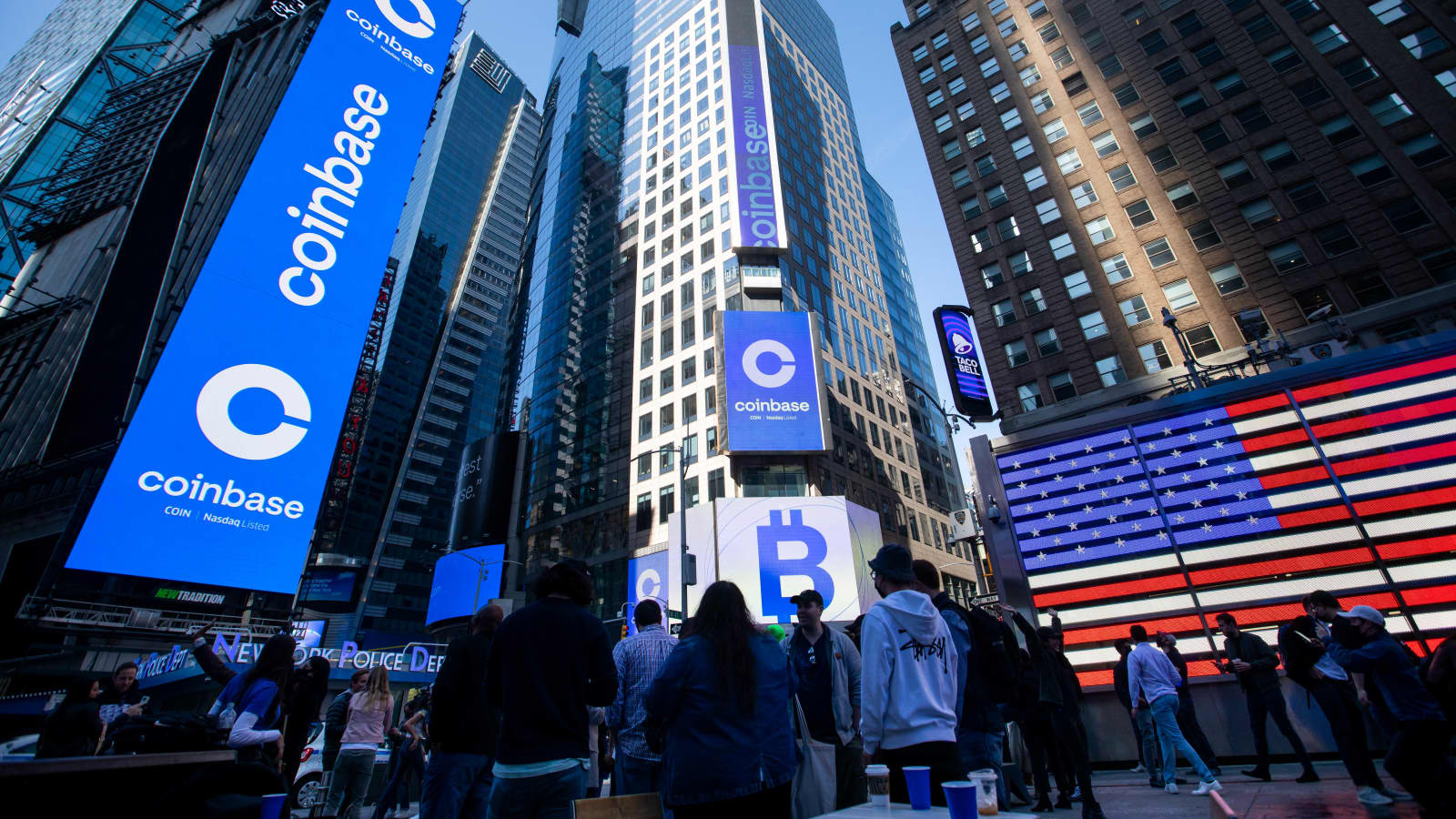
Coinbase recently announced a pilot project in collaboration with local nonprofits and community organizations in New York. The goal is to distribute USDC (a stablecoin pegged to the U.S. dollar) as a form of financial assistance to low-income residents.
USDC is a digital currency that maintains a 1:1 value with the U.S. dollar, meaning one USDC equals one dollar. This makes it stable, transparent, and easy to use — unlike more volatile cryptocurrencies like Bitcoin or Ethereum.
Instead of mailing checks or relying on slow banking systems, Coinbase’s pilot uses blockchain technology to send funds instantly and directly to recipients’ wallets.
2. Why Use USDC for Aid Delivery?
The promise of stablecoins in real-world use
The choice of USDC isn’t random. In the world of crypto, stablecoins serve as a bridge between digital and traditional finance. They’re designed to provide all the benefits of cryptocurrencies — such as speed, transparency, and borderless transactions — without the volatility.
Here’s why USDC is ideal for this pilot program:
-
Instant transfers: Blockchain payments process in seconds, not days.
-
Low fees: Sending money costs a fraction compared to traditional wire transfers or check processing.
-
Transparency: Every transaction is recorded on the blockchain, making it traceable and secure.
-
Financial inclusion: Anyone with a smartphone can receive and store USDC, even without a bank account.
For low-income New Yorkers — many of whom face barriers to accessing traditional financial systems — these advantages could make a real difference.
3. The Challenge of Traditional Aid Systems
Why blockchain may be a better solution
The current system for distributing financial aid in the U.S. can be slow and inefficient. It often involves multiple intermediaries such as government agencies, banks, and nonprofit organizations. As a result:
-
Delays occur in processing payments.
-
Administrative costs eat into aid budgets.
-
Recipients without bank accounts struggle to receive funds.
According to a 2023 FDIC report, nearly 6 million Americans remain unbanked, with disproportionately higher rates among low-income and minority communities.
By introducing crypto-based aid delivery, Coinbase hopes to reduce these inefficiencies. With blockchain, funds can move directly from donor to recipient, eliminating much of the red tape.
4. How the Pilot Program Works
From Coinbase to community
So, how exactly will this crypto aid project operate?
Coinbase has partnered with local New York nonprofits that already serve low-income communities. These organizations identify eligible recipients and assist them in setting up digital wallets.
Once verified, participants receive USDC directly into their wallets via the Coinbase platform. From there, they can:
-
Spend the USDC on participating merchants.
-
Convert it into U.S. dollars.
-
Use it for online transactions or bills.
The process is designed to be simple and user-friendly. Coinbase also provides education and support to help participants understand how to manage their funds safely — an essential step for beginners in crypto.
5. Benefits of Using Crypto for Social Aid
Faster, cheaper, more transparent
The potential advantages of this approach are significant.
1. Speed and efficiency
Traditional aid systems often take weeks to process payments. With crypto, funds arrive almost instantly, even on weekends or holidays.
2. Lower costs
By removing banks and other intermediaries, aid providers save on transaction and administrative fees. More of the money actually reaches the people who need it.
3. Transparency
Blockchain records every transaction publicly. This prevents fraud and ensures that funds are used as intended.
4. Financial access
Even people without a bank account can receive USDC using just a smartphone. This makes financial aid more inclusive.
5. Global potential
If this pilot succeeds, similar models could be applied worldwide — especially in countries with limited banking infrastructure.
In short, crypto-powered aid could revolutionize the way governments and NGOs deliver assistance.
6. Challenges and Risks
The road ahead isn’t without obstacles
While this pilot sounds promising, it’s not without challenges.
1. Digital literacy
Many low-income individuals may not be familiar with crypto wallets or blockchain technology. Without proper education, they could fall victim to scams or lose access to their funds.
2. Access to technology
Not everyone owns a smartphone or has reliable internet access, both of which are required to use digital wallets.
3. Price stability and conversion
Although USDC is pegged to the U.S. dollar, converting it to cash may involve third-party services that charge small fees.
4. Regulatory scrutiny
Crypto-based aid programs must comply with U.S. financial regulations, including anti-money laundering (AML) and know-your-customer (KYC) laws. Ensuring compliance could be complex and costly.
These hurdles highlight why this pilot is still a test — it’s an experiment to see whether crypto can complement or even replace traditional aid systems effectively.
7. The Bigger Picture: Crypto and Financial Inclusion
A glimpse into the future of aid delivery
Coinbase’s initiative isn’t just about helping New Yorkers — it’s a proof of concept for how blockchain could transform global aid.
Around the world, organizations like the United Nations and Red Cross have already tested similar blockchain-based payment systems in countries like Kenya, Ukraine, and Venezuela.
If Coinbase’s program proves successful, it could pave the way for a new model of financial support — one that’s faster, fairer, and more transparent.
Moreover, it could demonstrate how crypto is not just about speculation or trading. It can be a real-world solution for some of society’s most pressing problems, from poverty to financial exclusion.
8. What This Means for the Crypto Industry
Beyond investment — toward social good
The crypto industry has faced criticism for being speculative and disconnected from real-world needs. But initiatives like this one challenge that narrative.
If USDC aid delivery works, it could:
-
Improve crypto’s public image by showing its social value.
-
Encourage governments and nonprofits to adopt blockchain technology.
-
Accelerate stablecoin adoption as a practical tool for payments.
-
Strengthen Coinbase’s reputation as a leader in financial innovation.
Most importantly, it would show that crypto isn’t just a digital asset class — it’s a tool for empowerment.
9. Will It Work?
The verdict is still out
While it’s too early to judge, the Coinbase USDC pilot represents a major step in the evolution of crypto for social good. If recipients find it easy to use, and if nonprofits can distribute funds efficiently, this model could scale nationwide.
However, success will depend on education, accessibility, and regulatory support. Coinbase and its partners must ensure users are protected, transactions are simple, and compliance is airtight.
If these challenges are overcome, this initiative could mark the beginning of a new era of blockchain-powered aid delivery — not just in New York, but across the world.
Final Thoughts
The Coinbase USDC aid pilot is more than just another crypto experiment — it’s a bold attempt to use digital money for real-world impact. By bringing blockchain efficiency to social welfare, Coinbase could set the standard for how technology and compassion intersect.
Whether it succeeds or fails, one thing is certain: crypto’s role in financial inclusion is just getting started. And projects like this show that the future of finance might not just be profitable — it could also be profoundly humane.
✅ Slug:
coinbase-usdc-aid-new-york-crypto
✅ Meta Description:
Coinbase is testing a new pilot using USDC to deliver aid to low-income New Yorkers. Learn how this crypto-based program works, its benefits, challenges, and what it could mean for the future of financial inclusion.