1. A Groundbreaking Move in the Crypto World
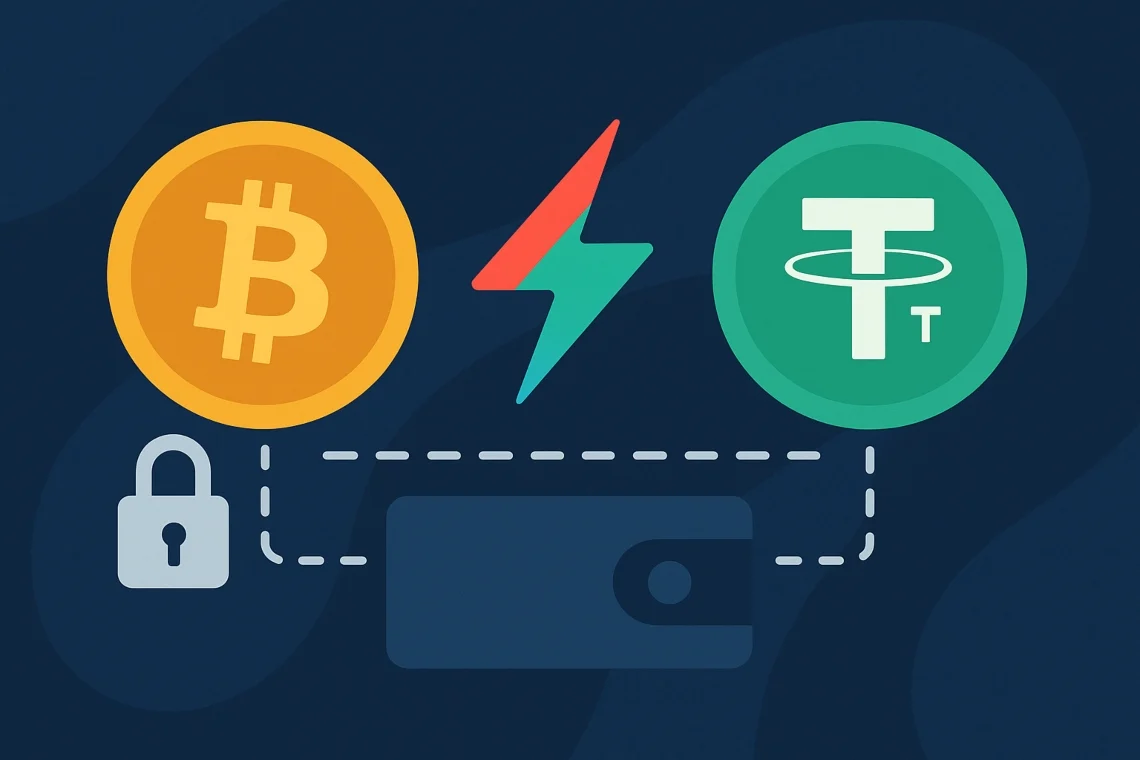
The crypto industry is buzzing with excitement as Tether’s USDT, the world’s largest stablecoin, has officially gone native on Bitcoin using the RGB protocol. For years, Bitcoin was seen primarily as digital gold, a store of value rather than a platform for stablecoins. This move challenges that narrative and signals a new era where Bitcoin expands its functionality beyond being a simple value transfer system. The adoption of the RGB protocol by Tether is not just a technical upgrade; it’s a bold strategic play. It shows the increasing appetite for stable, reliable assets on top of Bitcoin’s secure and decentralized network.
2. What Makes This Development Special
Tether has already existed on multiple blockchains, including Ethereum, Tron, and Solana. Bitcoin remains the most secure and decentralized crypto network, and adding stablecoins directly on top of it changes the way people will use both assets. Unlike other blockchains that were designed for flexibility and programmability, Bitcoin historically had limitations. But with innovations like RGB, Bitcoin can now support advanced functions while preserving its core strengths: security and decentralization.
3. Understanding the RGB Protocol
The RGB protocol is the key enabler behind this innovation. Built on top of Bitcoin and the Lightning Network, RGB allows users to issue and transfer digital assets without congesting Bitcoin’s main chain. This makes it possible to manage tokens like Tether in a way that’s both scalable and private. The brilliance of RGB lies in its off-chain smart contract model. Instead of storing data on the Bitcoin blockchain itself, it keeps information off-chain while relying on Bitcoin’s security for validation. This reduces blockchain bloat while giving users new opportunities for innovation.
4. Why Tether Chose Bitcoin for USDT
Many wonder why Tether decided to expand to Bitcoin now. The answer lies in Bitcoin’s unmatched security and global recognition. Despite Ethereum and Tron hosting a large share of stablecoin transactions, Bitcoin remains the ultimate foundation of trust in the crypto ecosystem.
For Tether, aligning with Bitcoin is also a strategic branding move. It positions USDT as a truly universal stablecoin that can operate seamlessly across multiple blockchains while benefiting from Bitcoin’s reputation as the most trusted network.
5. The Impact on Bitcoin’s Utility
This development also redefines how Bitcoin itself is perceived. By integrating USDT through RGB, Bitcoin is no longer just an asset to hold or trade — it becomes a platform for stable, everyday transactions. This is especially significant for users in countries with unstable currencies, where holding a stablecoin like Tether can protect wealth while Bitcoin ensures censorship resistance. The integration could also attract new users to Bitcoin who may have avoided it due to volatility concerns. With USDT available, people can enjoy stability while still leveraging Bitcoin’s infrastructure.
6. Challenges and Opportunities Ahead
Of course, the road is not without challenges. Implementing stablecoins on Bitcoin requires technical innovation, developer support, and user education. The crypto industry has seen experiments fail before due to poor adoption or lack of scalability. Yet, the opportunities outweigh the risks. If successful, this move could trigger a wave of new projects building on top of Bitcoin. Developers may see RGB as a gateway to unlock Bitcoin’s untapped potential, creating tools and services that rival those on Ethereum.
7. The Broader Implications for Stablecoins
Stablecoins have become the backbone of the crypto economy, serving as a bridge between traditional finance and digital assets. By moving onto Bitcoin, Tether signals that the stablecoin market is ready to evolve. Instead of relying solely on flexible but less secure blockchains, stablecoins can now anchor themselves to the most resilient network in existence. This could inspire other stablecoins to follow suit. Imagine a future where multiple stablecoins operate on Bitcoin, each bringing liquidity and usability to the Lightning Network. Such a development would further cement Bitcoin’s role as the center of gravity in the crypto ecosystem.
8. A Step Toward Financial Freedom
For everyday users, the implications are profound. In regions suffering from hyperinflation or strict capital controls, holding both Bitcoin and USDT on the same network could provide unprecedented financial freedom. Bitcoin offers protection against censorship, while Tether provides price stability. Together, they create a powerful financial toolkit.
This combination could accelerate adoption in emerging markets, where access to reliable banking is limited. Instead of relying on multiple blockchains or third-party platforms, users can now operate directly within Bitcoin’s ecosystem.
9. Reactions from the Crypto Community
The crypto community has welcomed the news with optimism. Bitcoin maximalists, who typically prefer Bitcoin remain simple and unmodified, have shown cautious interest in RGB’s approach. Unlike earlier attempts to add functionality, RGB respects Bitcoin’s base layer by offloading complexity to off-chain systems.
On the other hand, stablecoin enthusiasts see this as validation of Tether’s dominance. By going native on Bitcoin, Tether cements its role as the go-to stablecoin while also opening doors for greater interoperability across the crypto industry.
10. What Comes Next
The integration of USDT with Bitcoin via RGB is just the beginning. Developers are already exploring ways to expand the ecosystem, from payment apps to decentralized exchanges running on top of the protocol. This could give Bitcoin a new role as both a store of value and a financial infrastructure for global payments. If adoption continues, we may soon see Bitcoin hosting a range of digital assets, blurring the lines between what was once thought possible only on Ethereum. The future of crypto may no longer be about choosing one chain over another, but about leveraging Bitcoin as the ultimate foundation for digital money.
11. Closing Thoughts
Tether’s move to bring USDT natively to Bitcoin through the RGB protocol is more than just a technical milestone — it’s a shift in how we think about crypto. Bitcoin is evolving from a digital gold narrative into a full-fledged platform capable of supporting stable assets. The success of this integration could change the future of stablecoins, enhance Bitcoin’s utility, and push the industry closer to mainstream adoption. As innovation continues, one thing is certain: Bitcoin’s journey is far from over.
✅ Slug:
tether-usdt-goes-native-on-bitcoin-rgb-protocol
✅ Meta Description:
Tether’s USDT stablecoin is now native on Bitcoin through the RGB protocol, unlocking new use cases and expanding Bitcoin’s utility beyond digital gold. Learn how this milestone impacts the future of crypto, stablecoins, and financial freedom.