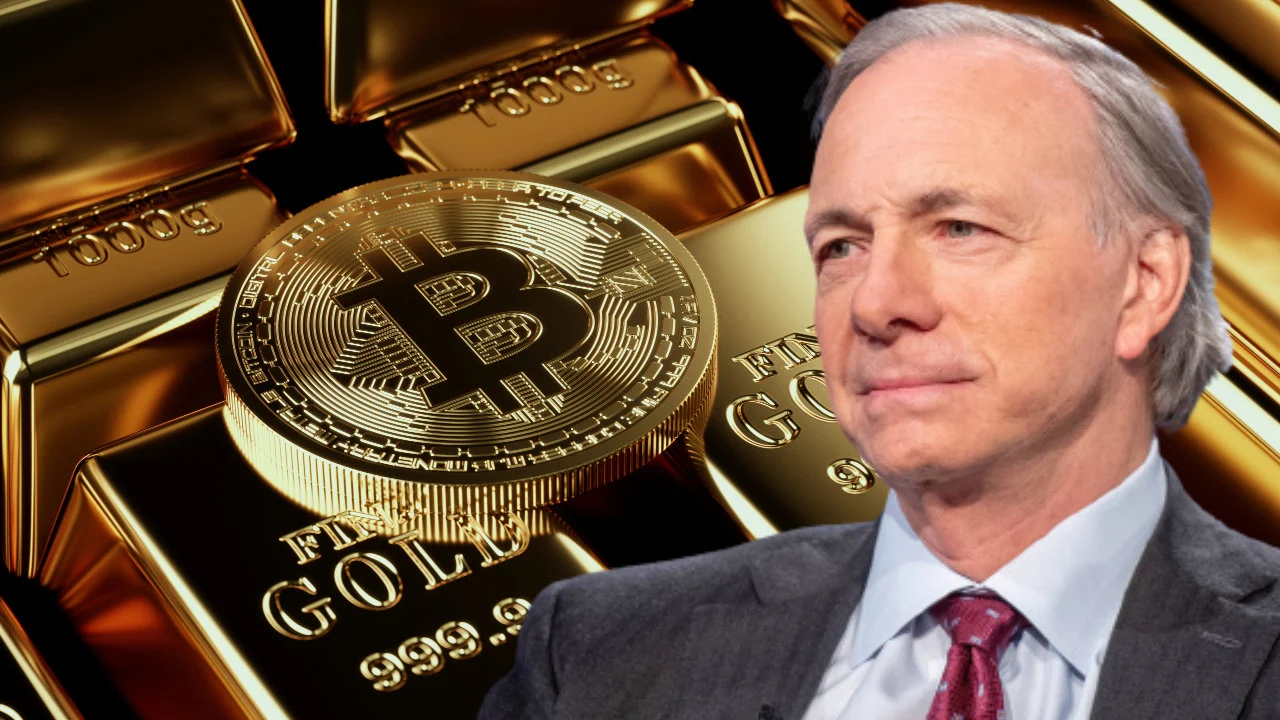
In the ever-evolving world of crypto, few topics spark as much debate as whether Bitcoin could one day become a global reserve currency. While many investors and enthusiasts see it as “digital gold” with world-changing potential, billionaire investor Ray Dalio — the founder of Bridgewater Associates, one of the world’s largest hedge funds — holds a more cautious view.
Dalio acknowledges Bitcoin’s innovation and its role in diversifying portfolios, yet he firmly believes it will never replace traditional currencies like the U.S. dollar as a global reserve. His reasoning? It’s rooted in economics, politics, and history.
This beginner-friendly guide explores why Ray Dalio doubts Bitcoin’s reserve currency potential, what a reserve currency really means, and what this perspective means for crypto investors.
1. Understanding the Concept of a Reserve Currency
What is a reserve currency?
Before diving into Dalio’s views, let’s start with the basics. A reserve currency is a currency held in significant quantities by governments and central banks as part of their foreign exchange reserves. It’s used for international trade, global debt settlements, and financial stability.
Today, the U.S. dollar holds this status, followed by the euro, the yen, and the pound. Being the world’s reserve currency gives a nation immense power — it allows cheaper borrowing, global trade dominance, and geopolitical influence.
For Bitcoin to replace or compete with these currencies, it would need to achieve global acceptance, stability, and scalability — three things Dalio believes remain out of reach for now.
2. Ray Dalio’s Core Argument: Power and Control
Governments won’t give up control easily
Dalio’s most direct reason for dismissing Bitcoin as a reserve currency is simple: governments don’t surrender control over money.
Reserve currencies exist within a structured global financial system, backed by governments, central banks, and laws. Bitcoin, by design, is decentralized — no authority controls it. That’s precisely what makes it appealing to crypto enthusiasts but worrisome to policymakers.
According to Dalio, if Bitcoin ever grows powerful enough to threaten national currencies, governments would regulate or restrict it. History shows that states act aggressively to maintain control over monetary systems.
He once said, “If it becomes too successful, they will kill it.” While this sounds harsh, Dalio’s point highlights the tension between decentralized finance and centralized power.
3. Bitcoin’s Limitations as a Global Reserve Asset
Volatility and scalability challenges
Dalio often emphasizes that for any currency to serve as a global reserve, it must be stable, liquid, and widely trusted. Unfortunately, Bitcoin struggles with all three.
-
Volatility: Bitcoin prices can fluctuate by thousands of dollars within hours. Reserve currencies can’t afford that instability.
-
Scalability: The Bitcoin network can only process around 7 transactions per second, compared to Visa’s 24,000+. That’s far from ideal for global trade.
-
Energy consumption: Mining Bitcoin requires enormous amounts of electricity, which adds another layer of inefficiency.
For Dalio, these issues prevent Bitcoin from evolving beyond a speculative asset or a store of value like gold. While it’s innovative, it simply doesn’t have the infrastructure or global acceptance needed to act as the backbone of the world economy.
4. The Historical Context Behind Dalio’s Belief
Learning from past currency transitions
Ray Dalio’s views on crypto and global finance are deeply influenced by his study of history. In his book “Principles for Dealing with the Changing World Order,” he outlines how reserve currencies have changed over time — from the Dutch guilder in the 1600s to the British pound in the 1800s, and now the U.S. dollar.
Each transition followed a period of war, trade dominance, and innovation. However, all reserve currencies shared a key feature: they were backed by strong, stable nations with political and military power.
Bitcoin, on the other hand, isn’t tied to any country. It has no government, no military, and no centralized leadership. For Dalio, that’s a major problem. Power, he argues, is what sustains a reserve currency — not just technology.
5. Bitcoin as “Digital Gold,” Not a Reserve Currency
A hedge, not a replacement
While Dalio doesn’t see Bitcoin as a future reserve currency, he’s far from a critic of its potential. In fact, he’s called it a “remarkable accomplishment.” He even revealed that he personally owns a small amount of Bitcoin as part of a diversified portfolio.
Dalio believes Bitcoin’s real strength lies in being a “digital alternative to gold.” Like gold, it’s scarce, durable, and can serve as a hedge against inflation and currency devaluation.
However, unlike gold, Bitcoin is more portable, easier to store, and more accessible. In Dalio’s eyes, that makes it a valuable asset — but not one capable of replacing the dollar or becoming the world’s primary settlement currency.
6. What This Means for Crypto Investors
Understanding Bitcoin’s realistic role
For beginners in the crypto space, Dalio’s insights serve as a valuable reality check. His perspective doesn’t mean Bitcoin has no future — it simply suggests that its role will differ from what some dreamers envision.
Here’s what investors can take away:
-
Bitcoin as a store of value: Like gold, it can hedge against inflation and currency decline.
-
Diversification tool: It can be part of a broader investment strategy, not a single all-in bet.
-
Not a currency replacement: Bitcoin’s volatility and lack of government backing limit its use as a global settlement tool.
Dalio’s balanced stance shows that you can appreciate Bitcoin’s innovation without assuming it will rule the financial world.
7. Could Dalio Be Wrong? The Case for Bitcoin’s Evolution
The potential for change
Of course, not everyone agrees with Dalio. Many crypto advocates argue that technology evolves faster than traditional finance can adapt.
For example:
-
Layer 2 solutions like the Lightning Network are improving Bitcoin’s scalability.
-
Institutional adoption is growing, with ETFs and public companies adding Bitcoin to their portfolios.
-
Decentralized finance (DeFi) is offering alternative ways to use crypto for lending, trading, and savings.
If Bitcoin continues to mature and governments eventually accept it as a legitimate asset class, Dalio’s skepticism might not hold forever. The financial system is changing — and so are people’s views on money.
8. The Broader Message Behind Dalio’s View
Balance over hype
Dalio’s message isn’t meant to discourage crypto enthusiasts but to encourage balanced thinking. His career has been built on studying long-term economic cycles and understanding power dynamics.
He recognizes Bitcoin’s strengths — innovation, decentralization, and scarcity — but also sees its limits within the current world order. His advice to investors? Stay open-minded but realistic.
Crypto is here to stay, but it’s still finding its place in the global system. Whether Bitcoin ever becomes a reserve currency or not, its influence on finance and technology is already undeniable.
Final Thoughts
Ray Dalio’s belief that Bitcoin will never be a reserve currency stems from a mix of economic realism and historical wisdom. He sees Bitcoin not as a rival to the dollar but as a complementary asset — one that provides diversification and freedom but not full financial dominance.
For investors and enthusiasts, this perspective is a reminder: crypto’s power lies not in replacing the system, but in transforming it. Bitcoin may never rule the global economy, but it has already reshaped how we think about money, value, and trust.
✅ Slug:
ray-dalio-bitcoin-reserve-currency
✅ Meta Description:
Billionaire investor Ray Dalio believes Bitcoin will never be a global reserve currency. Learn why he holds this view, what a reserve currency really means, and how Bitcoin fits into the evolving crypto world.